Freeze-Thaw At Laps
- You See
- Laps that leak only during late winter thaws.
- What It Means
- Meltwater refreezes inside laps and pries them open. Laps get cleaned, sealed, and covered with fabric.

As a Moville metal roof coating contractor, we schedule coating for dry stretches and watch dew, wind, and overnight lows so each coat cures right.
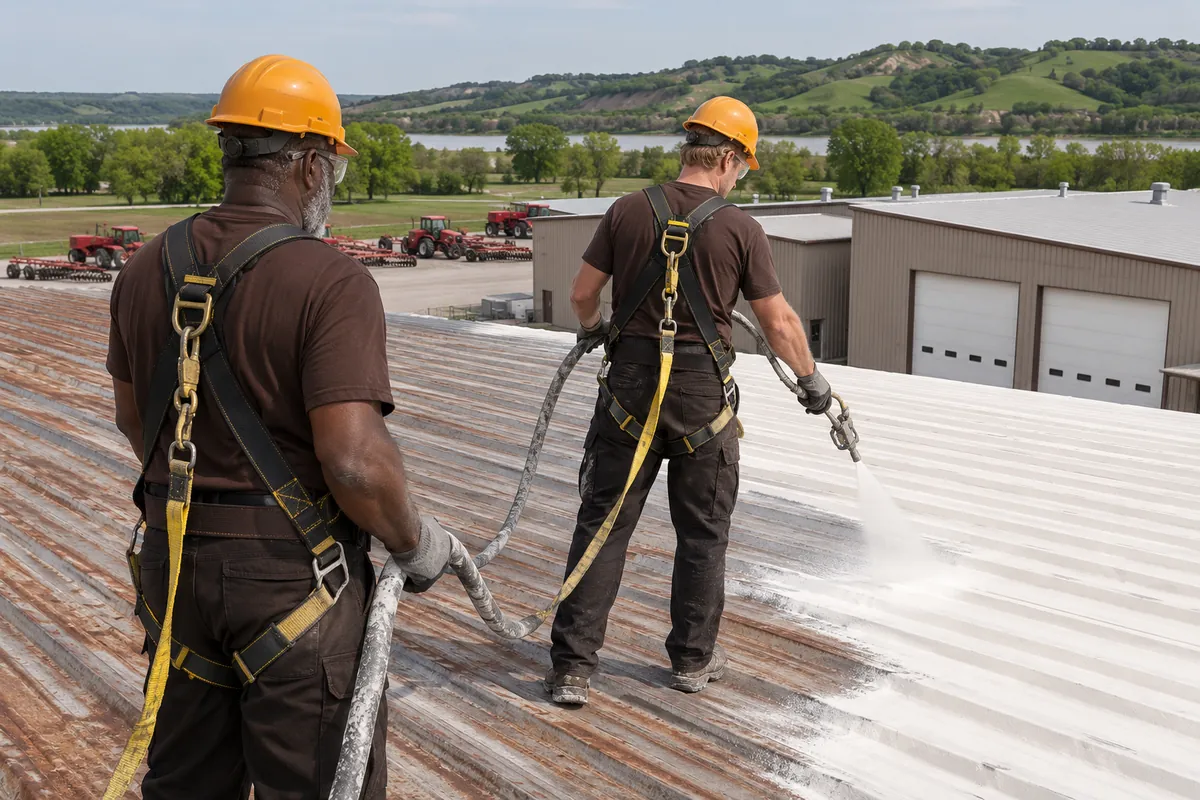
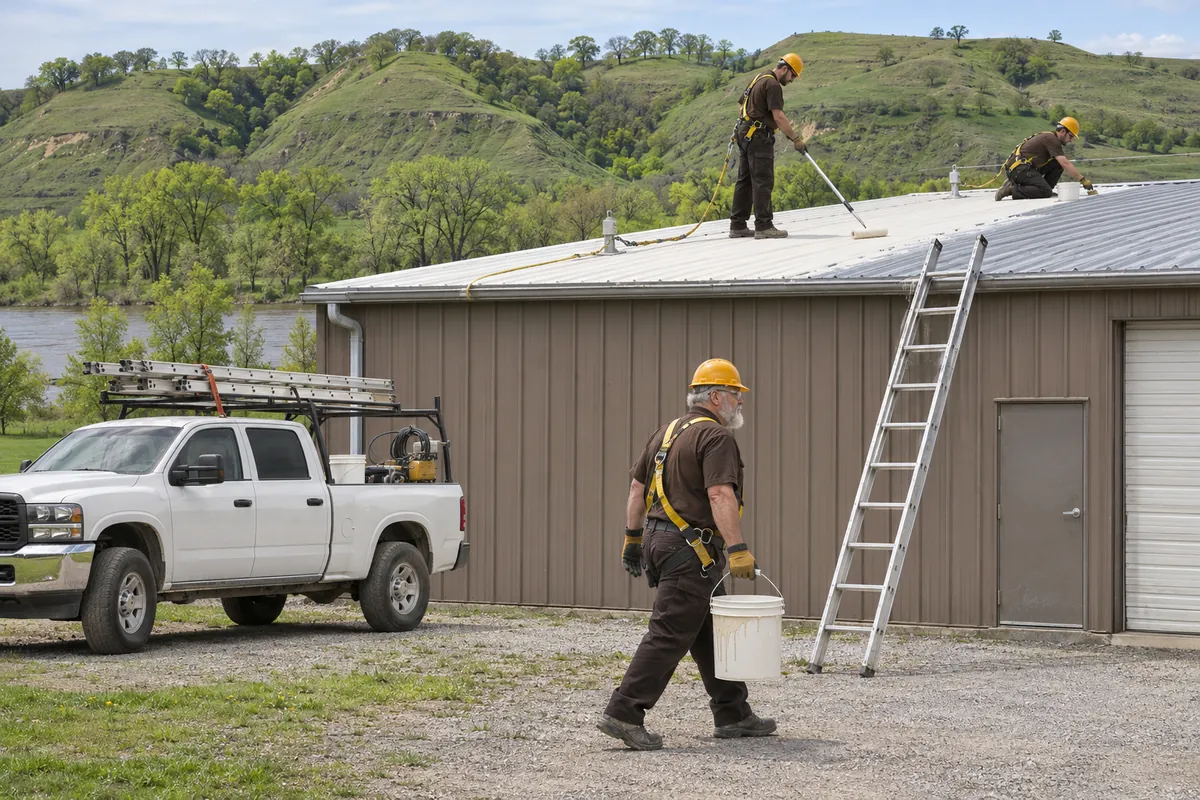
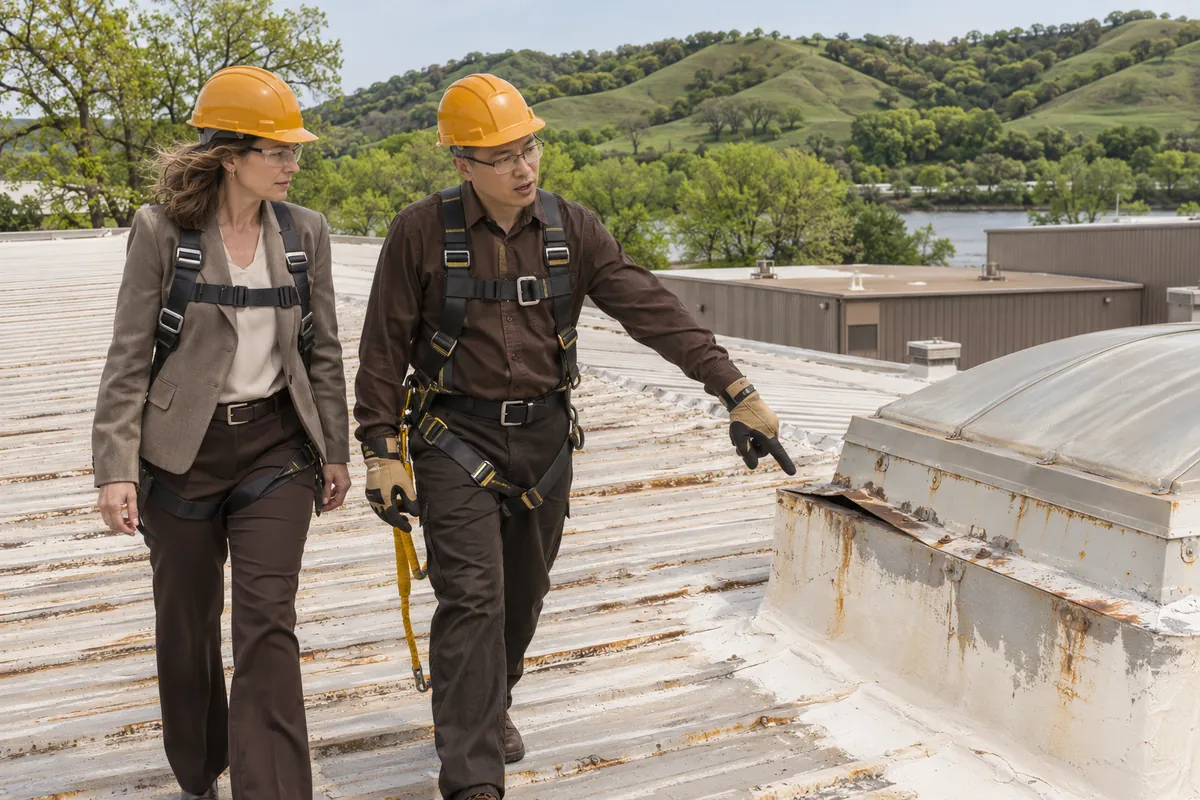
Moville metal roof coating is a weather job. Most coatings need dry panels, a surface temperature inside the maker's range, and rain-free hours after application to cure.
Late spring through early fall gives the most working days. We watch the forecast closely, check morning dew on the panels, and stop spraying when the wind picks up.
Iowa weather leaves marks on steel roofs that a coating can address.
Coating at the right time of year gives the roof a full cure and a longer service term.
Coating applied in the right temperature and dry weather bonds fully to primed steel.
Laps and screws sealed in summer stay tight through the first freeze-thaw season.
A white surface keeps the roof deck cooler through long summer days.
Booking dry stretches and backup days keeps the job moving without coating over damp panels.
Each system has its own weather needs. Here is how they fit Moville roofs.
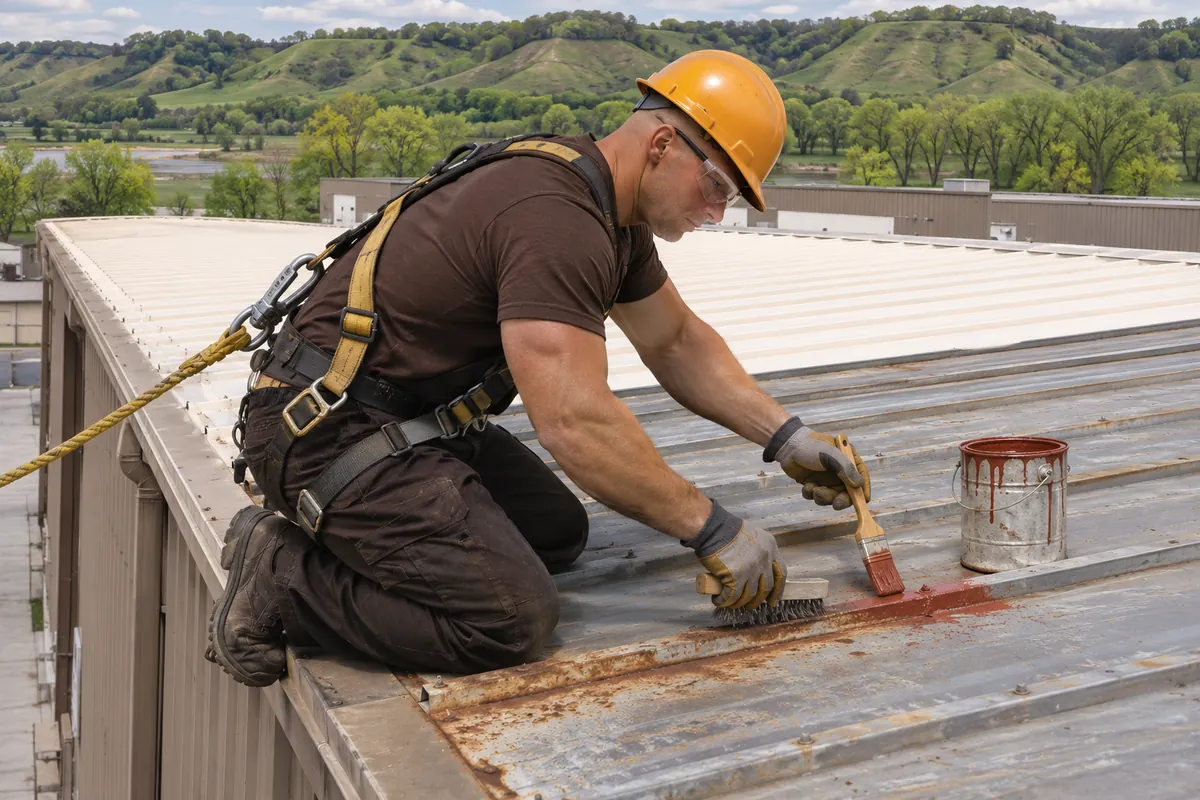
Metal coating builds need dry steel and mild temperatures, so they run from late spring into fall.
Metal roof coating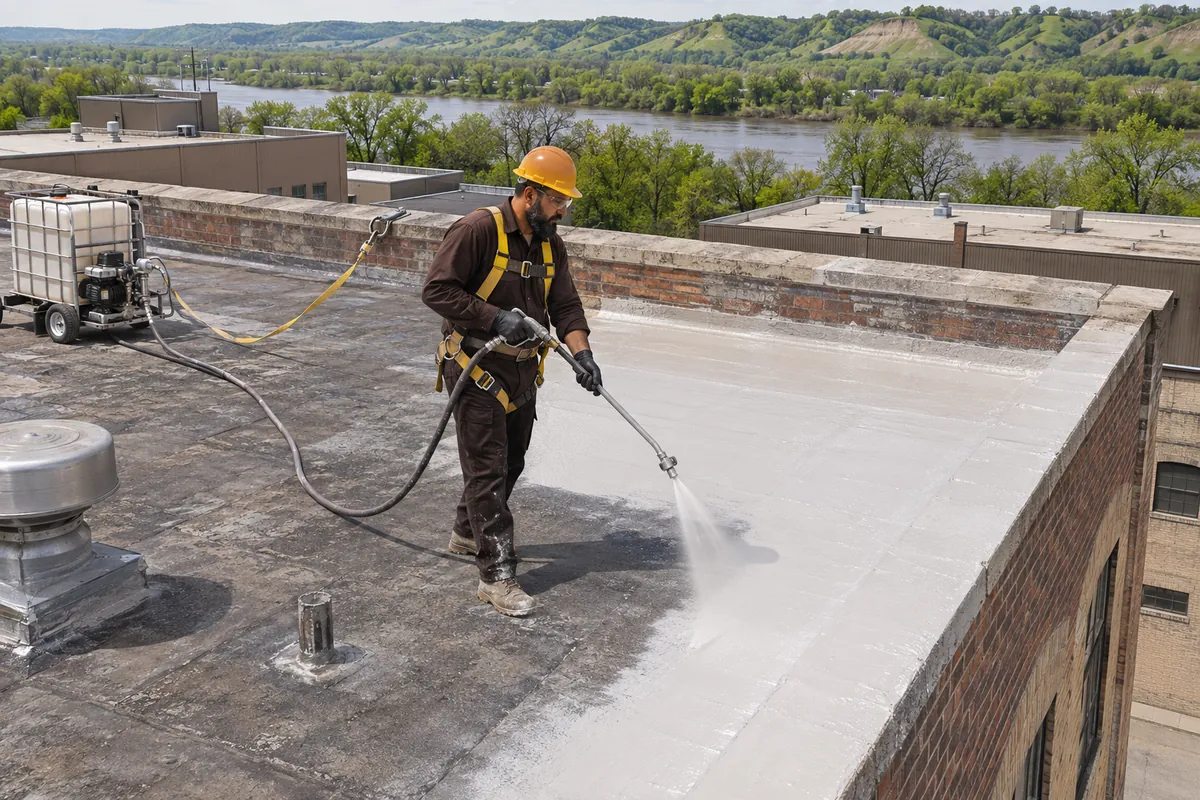
Silicone goes on flat bays that hold water, sprayed once the surface is dry and warm enough.
Silicone roof coating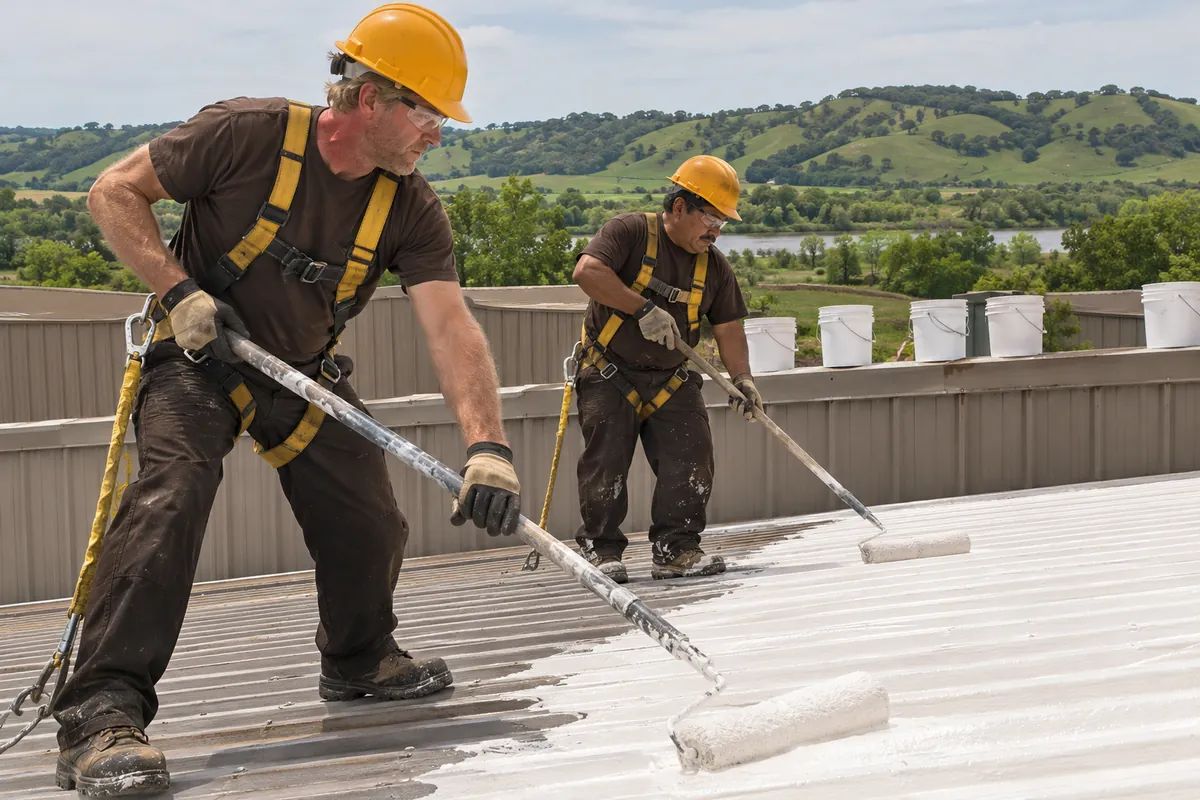
Acrylic needs warm air and hours without rain, so it waits for the steadiest summer weeks.
Acrylic roof coating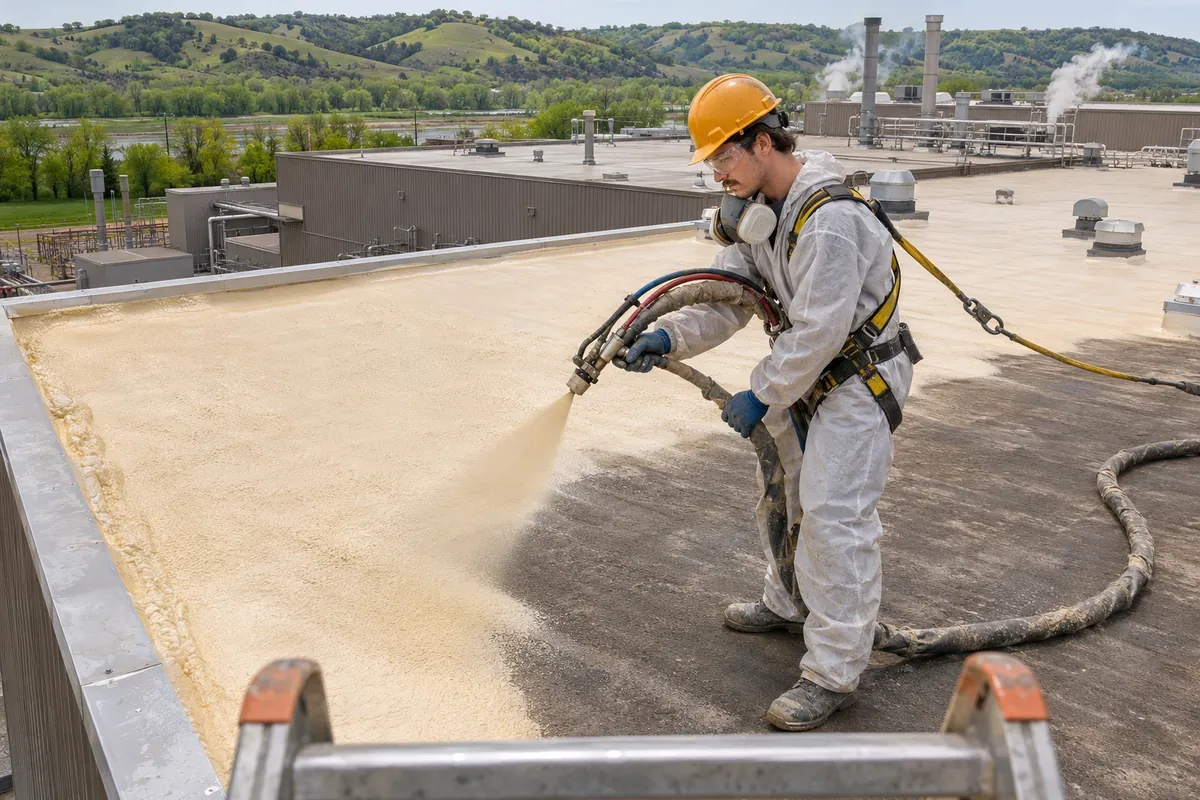
Foam needs a dry roof and calm wind, so foam days are picked carefully.
Spray foam roofing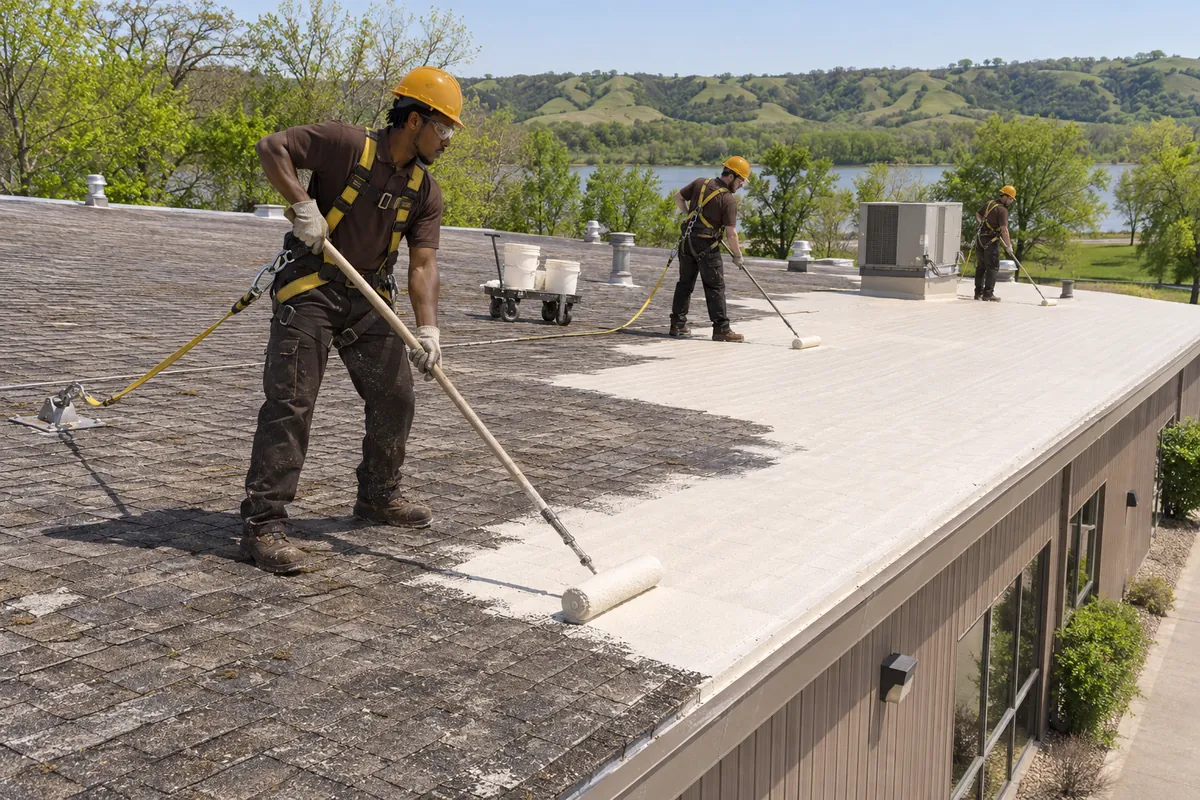
Shingle coatings go on in warm, dry months so they cure before cold weather.
Shingle roof coatingCall now to get on the schedule for the dry months. We inspect the roof and plan coating days around the forecast.
(402) 258-4527Call UsWeather checks run through every step of the job.
We check laps, screws, trim, and hail spots, take moisture readings, and pick the system that fits the roof and the season.
Coating days go on the calendar for dry stretches, with backup days in case rain moves in.
Washing, rust removal, and primer happen first, and the roof dries fully before any coating, including the laps where water hides.
Surface temperature, dew, and wind get checked before the first coat of the day, so the crew knows whether to spray, roll, or wait.
The coating goes on to spec thickness and gets the rain-free hours it needs before we walk away.
We also take coating work in these towns. Outside all of them? Call us or send us a message and ask.
Shops and warehouses coated in sections so dock doors stay open for trucks.
Sergeant Bluff metal roof coatingFarm supply and storage buildings that need deep rust prep at the laps.
Onawa metal roof coatingCore cuts and meter readings that show which roof sections are ready to coat.
Kingsley metal roof coatingSkylight, vent, and chalk prep on older steel shop roofs before coating.
Alton metal roof coatingMoville owners usually ask about timing first.
We book coating for dry stretches when panel temperatures sit within the coating maker's range, since most products need rain-free hours to cure. Late spring through early fall offers the most working days. Dew, wind, and overnight lows get checked each morning, and the work is staged so the business below keeps running.
Moville is part of our regular service area for commercial metal roof coating. Call (402) 258-4527 to set up a roof walk, or get a ballpark estimate from your roof size and book the walk afterward.
Call in winter or early spring to get on the coating schedule for the dry months. Inspections can happen any time the roof is clear of snow, and repairs like fastener work can start before the main coating season.
Coating plans at about $2.50 to $4.00 per square foot. Roof size, rust and fastener work, trim repairs after storms, and the number of coats set where a roof lands in that range, and the roof walk turns it into a firm price.
Early fall often works when days stay warm and dry. As nights near freezing and dew lingers, the window narrows, so late fall coating is limited to systems rated for cooler conditions or pushed to spring.
Work stops before the rain, and the fresh section is covered where it can be. Most products list how many dry hours they need, so a section that gets wet too soon is inspected and recoated if the film was damaged.
Spring storms are a good reason to inspect first and coat after. Hail-chipped spots found on the roof walk get primed and folded into the coating plan, so the new surface covers the damage from that season.
Call to get on the coating schedule, or send the roof size for a ballpark estimate.