Screws Loosened By Door Traffic
- You See
- Drips above overhead doors after rain.
- What It Means
- Panels over large doors flex each time the door cycles and in high wind. Screws there work loose first and get upsized and sealed.

As a Sergeant Bluff metal roof coating contractor, we coat steel roofs on shops and warehouses and plan the work around loading doors and truck traffic.
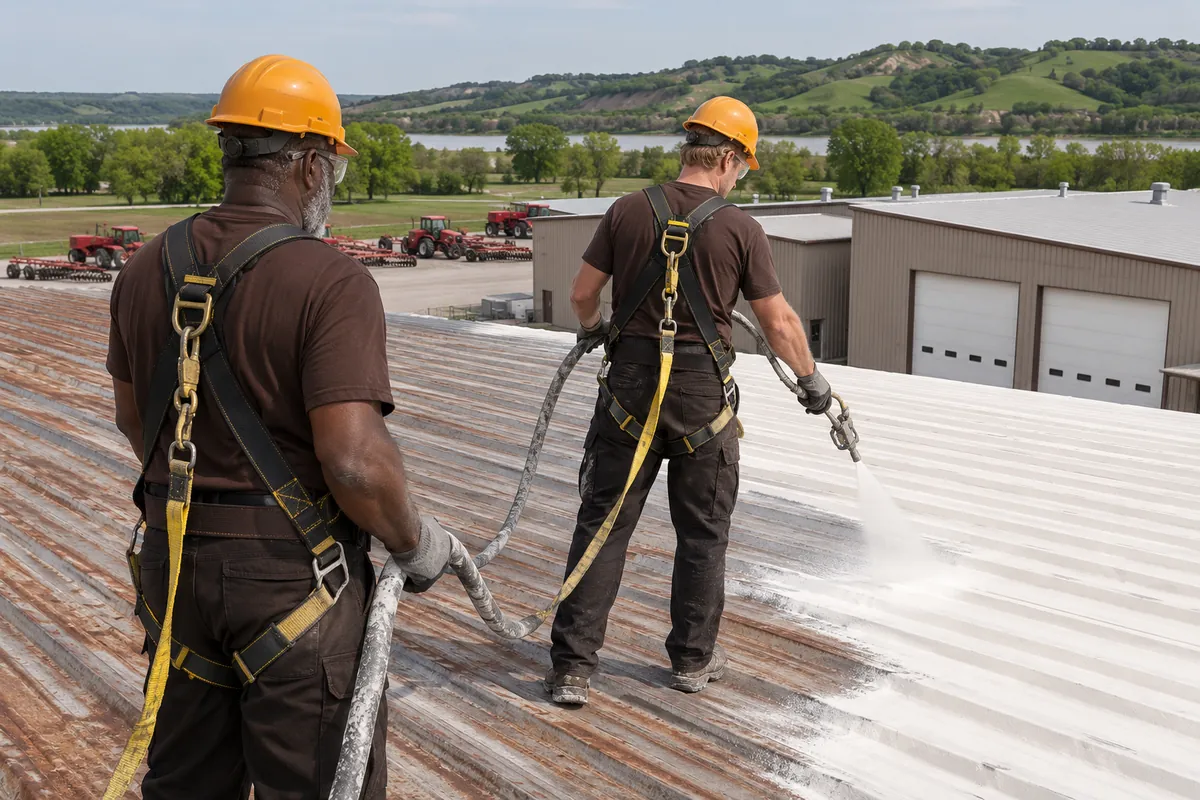
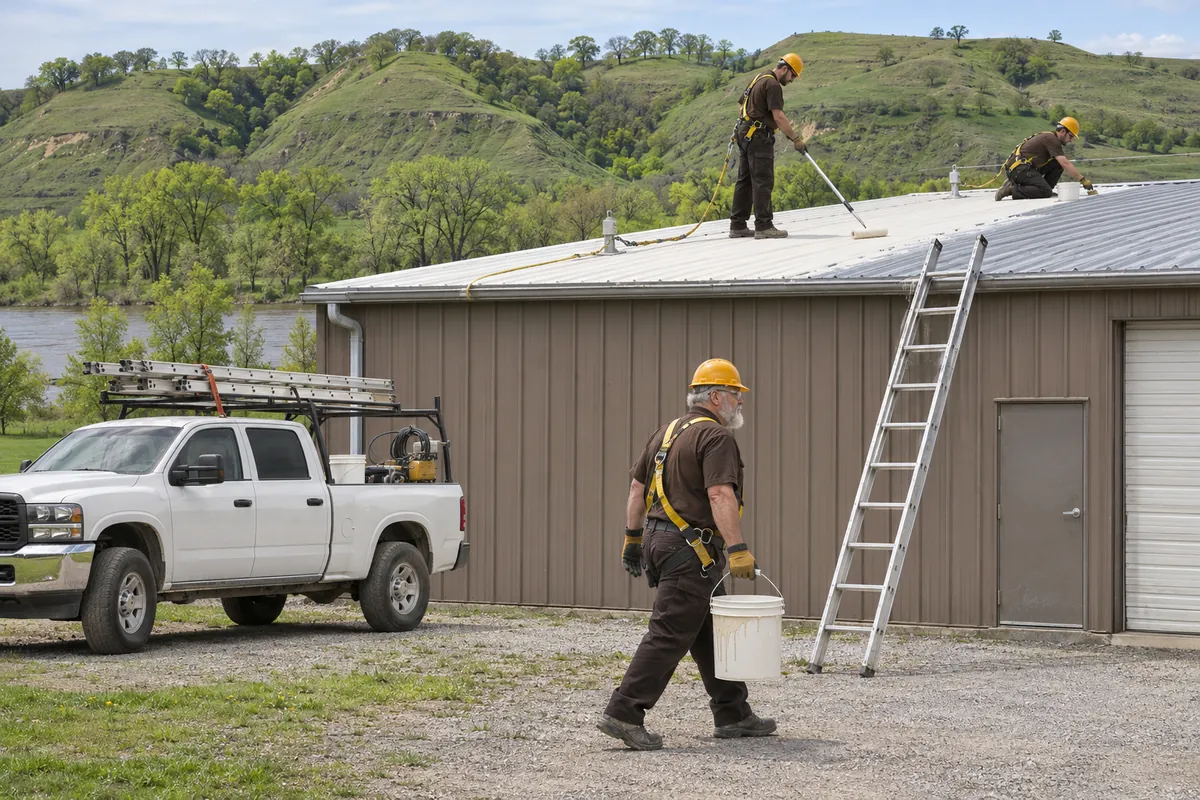
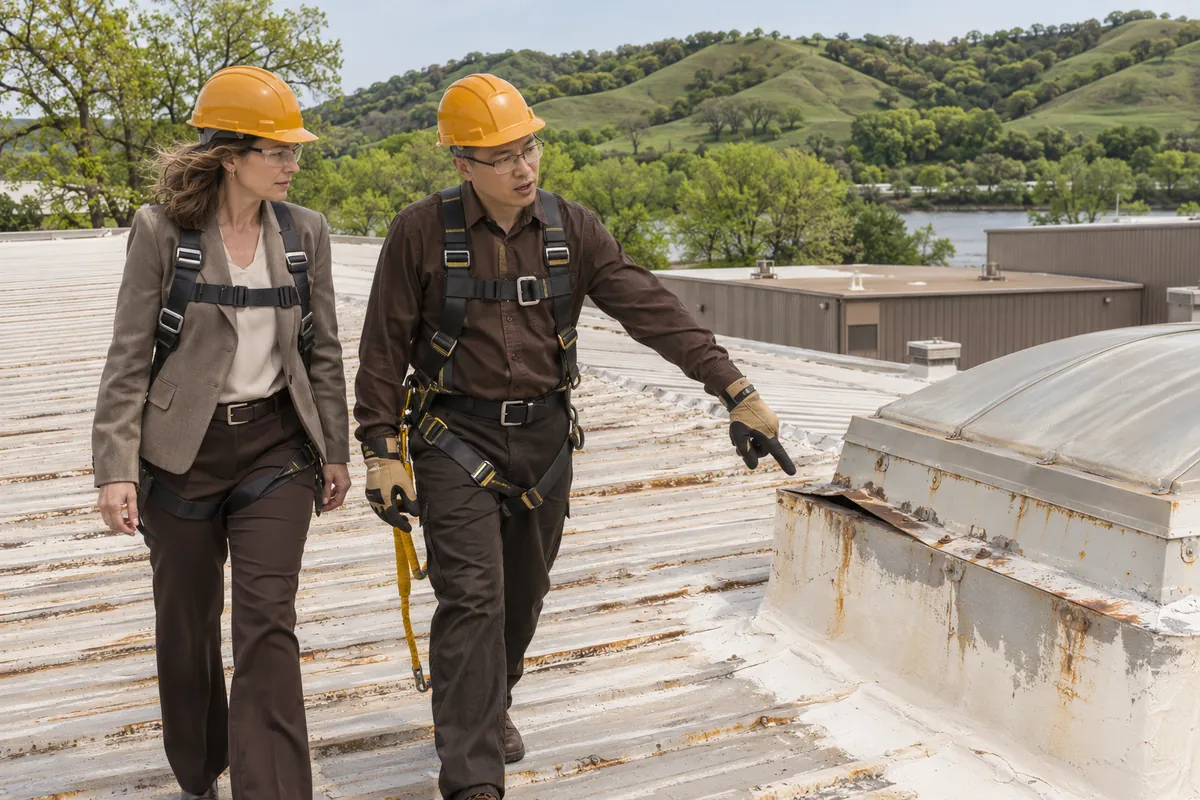
Sergeant Bluff metal roof coating jobs often sit over buildings that never really stop moving. Trucks back into dock doors, forklifts cross the yard, and staff come and go all day.
We map those paths before the job starts. Ladders, lifts, and material drops go where they block nothing, and the roof over each door is coated in a window you approve.
Shop and warehouse roofs here wear in a few common ways.
Coating keeps a busy building working while its roof gets a new surface.
Each door gets a scheduled window, so deliveries keep moving while the rest of the roof is coated.
Primer and coating seal panels that have been rusting at the eaves and laps for years.
A white roof reflects summer sun that bare steel would pass straight into the shop.
Upsized, sealed screws above each overhead door stop the drips that land on trucks and staff in every rainstorm.
Five systems cover the roofs we see in Sergeant Bluff. Each card names the building type it usually fits.
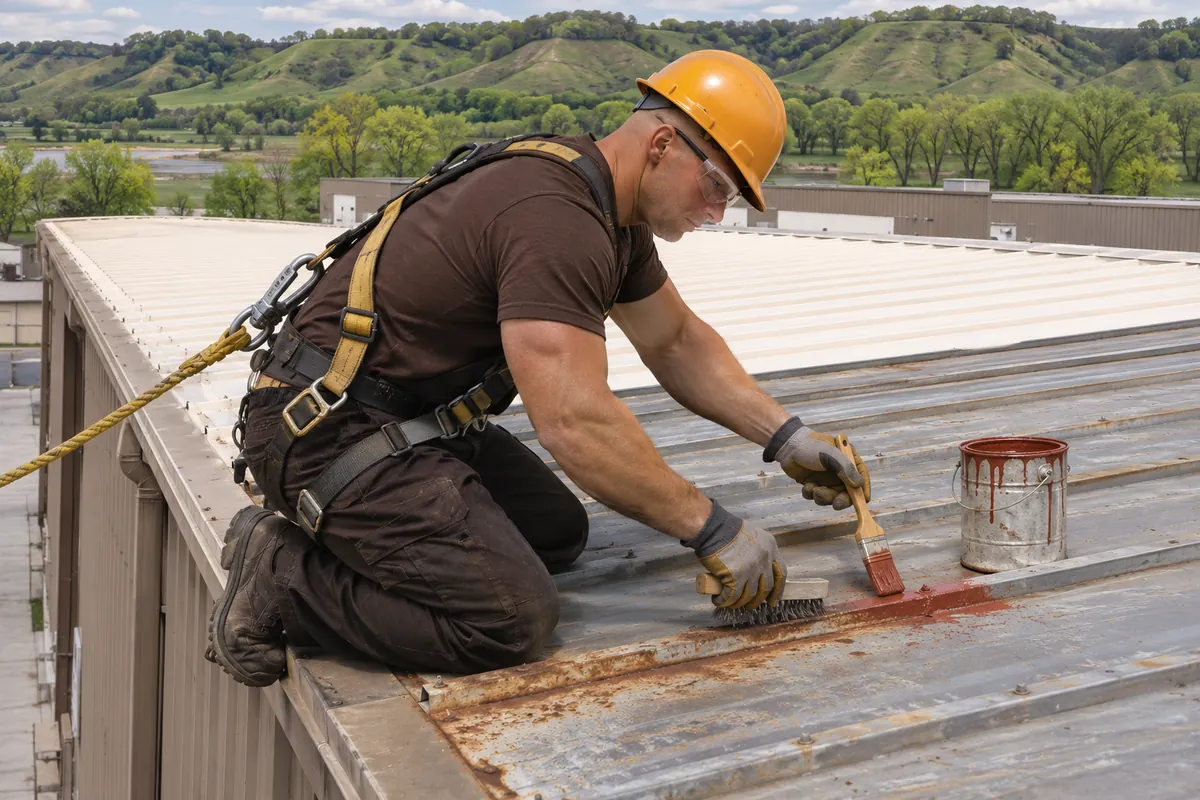
The main build for steel shop and warehouse roofs with leaking screws and rusty laps.
Metal roof coating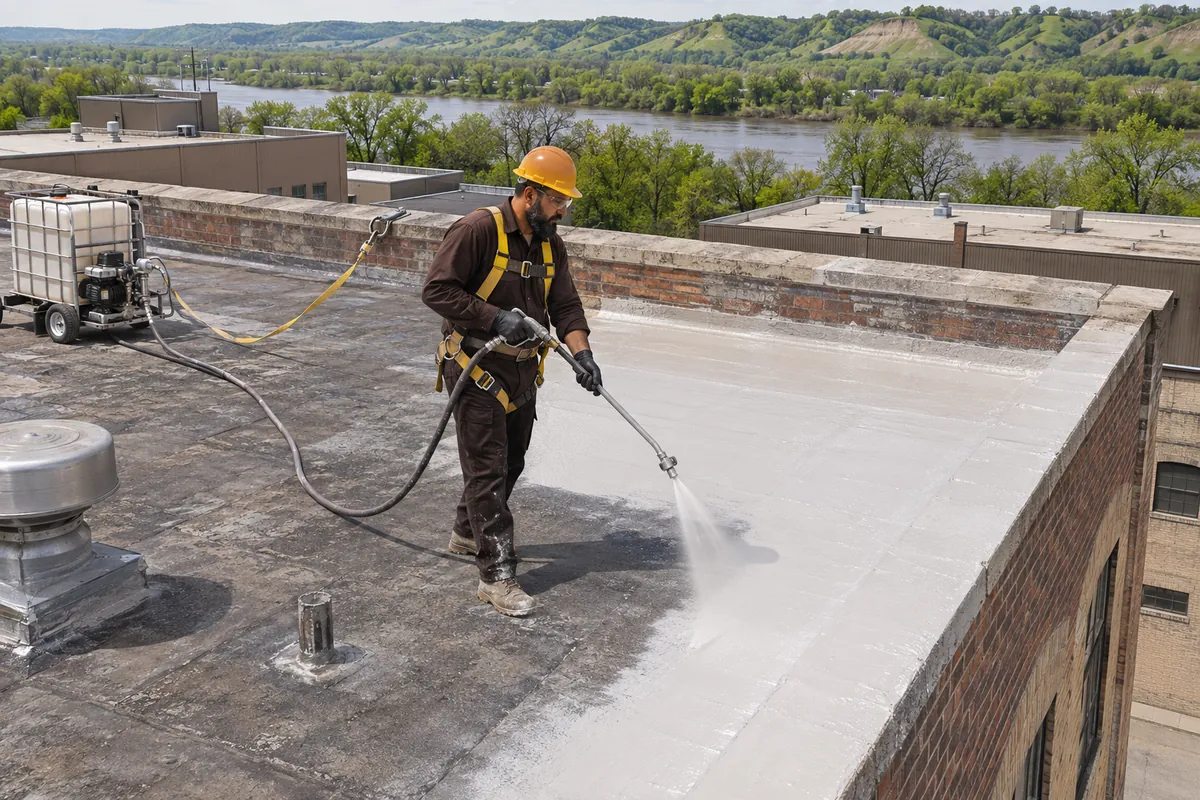
Low-slope office additions and flat canopies that hold water get silicone.
Silicone roof coating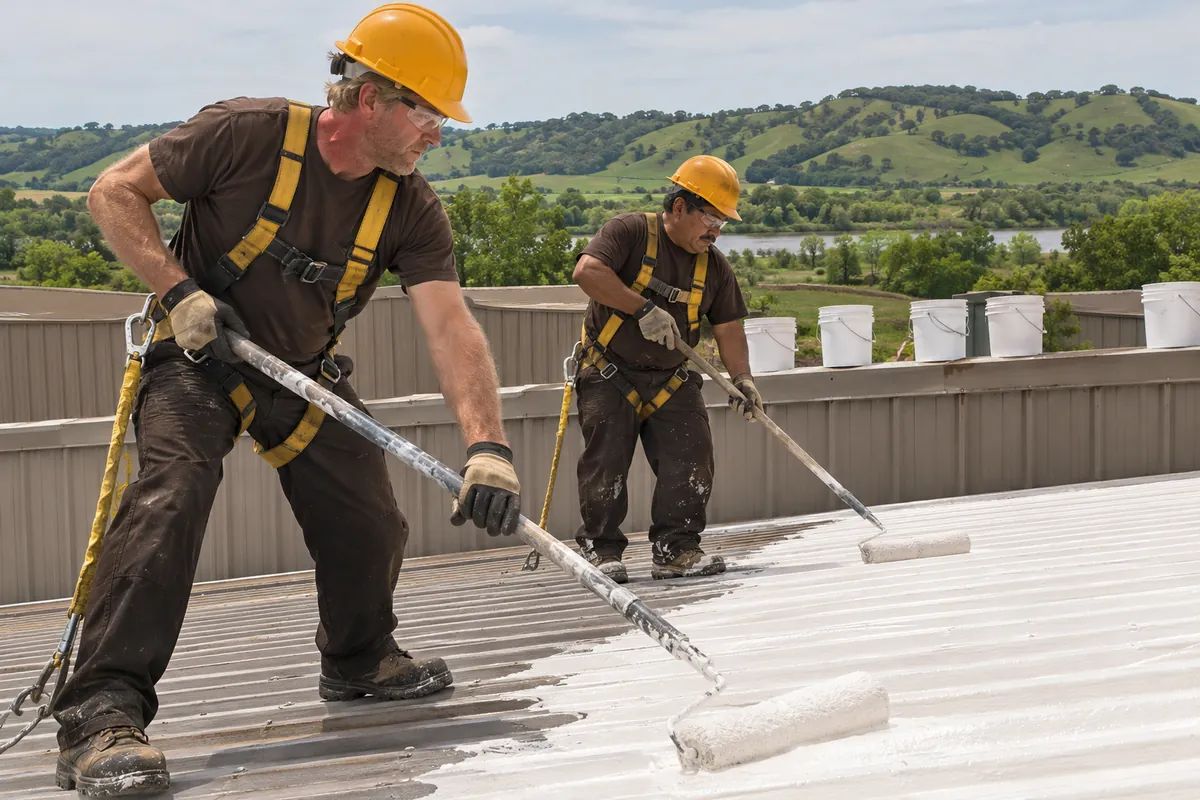
Pitched steel roofs that drain fast take a lower-cost acrylic system.
Acrylic roof coating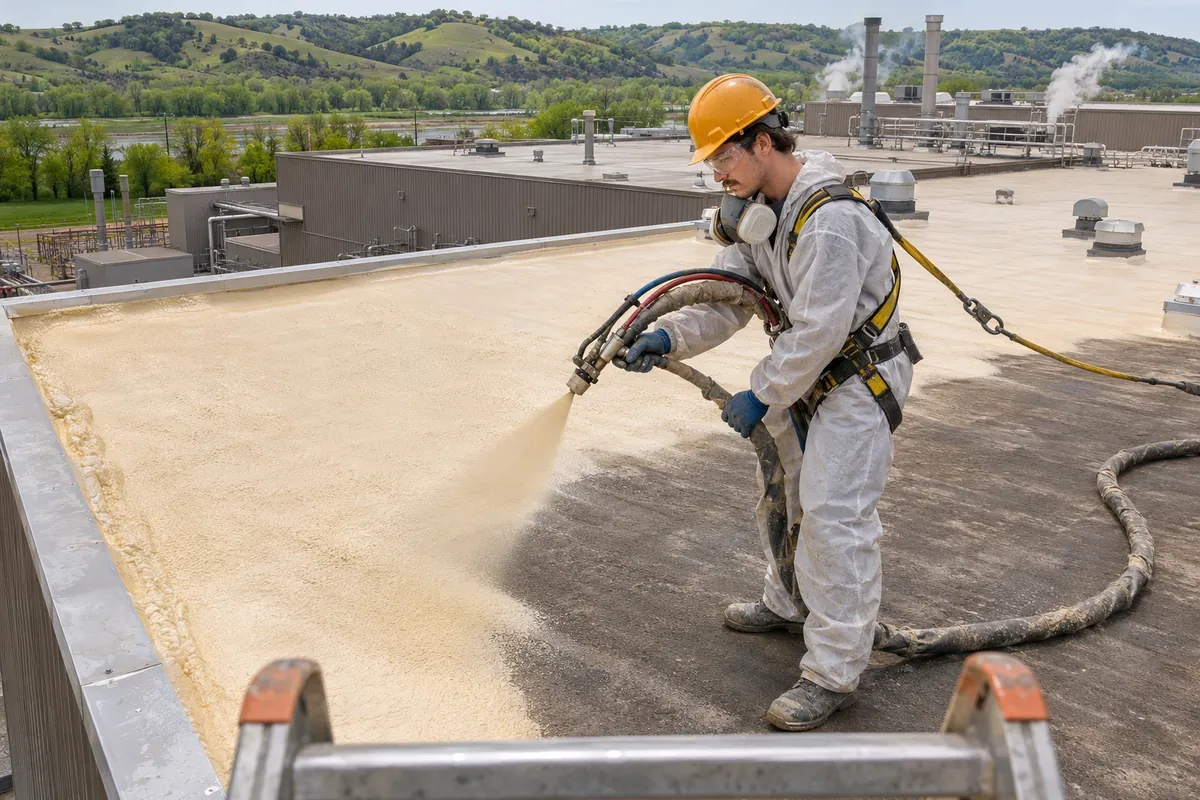
Heated shops that sweat in winter gain insulation and a sealed surface with foam.
Spray foam roofing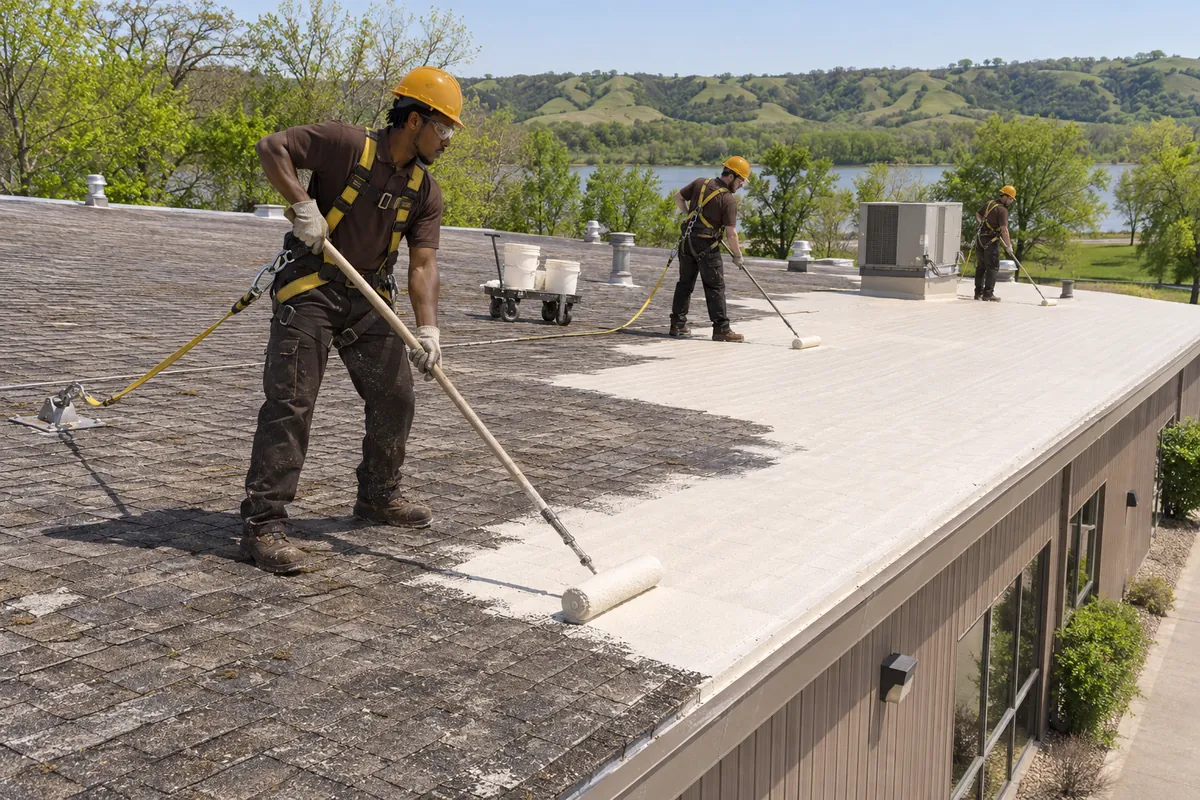
Front offices with shingle roofs get a coating when the tabs still lie flat.
Shingle roof coatingCall with the building address and which door. We check the roof above it and plan repairs around your delivery schedule.
(402) 258-4527Call UsThe steps match every roof we coat. The staging around trucks is what changes here.
We walk the roof, check fastener rows over each door, take moisture readings, and note where trucks and forklifts move below.
Lift spots, material drops, and the order of roof sections get set so each dock door closes only during the window you choose.
Washing, rust removal, and primer on bare spots, working section by section away from active doors.
Screws get tightened or upsized and sealed, and laps and gutter joints get fabric in a base coat.
The field coat goes on to spec thickness, and a final walk checks every door section before we pack up.
We coat roofs in these towns too. Somewhere else? Call us or send us a message.
Common questions from Sergeant Bluff building owners.
Coating plans at about $2.50 to $4.00 per square foot here, the same range we use across Siouxland. Roof size, how much rust and fastener work the panels need, and the number of coats move the total. Open yards are quicker to stage than roofs over tight lots or busy docks.
Yes. Coating work happens on top of the roof, so the shop floor, offices, and docks keep running. We schedule the sections over each door with you, keep lifts out of truck lanes, and put up screens wherever vehicles park close to the spray area.
We coat commercial metal roofs in Sergeant Bluff and the surrounding Siouxland towns. Call (402) 258-4527 to set up a roof walk, or get a ballpark estimate from your roof size first and book the walk after you see the range.
Only those close to the spray zone. We set overspray screens on the downwind side and ask that trailers within that area move for the day the field coat goes on. Rolling the coating near doors cuts drift further.
Sections away from active doors usually go first. That leaves the roof over docks and entrances for the slow windows you pick, so deliveries stay on schedule while the rest of the roof is finished.
Bent eave trim and crushed gutter sections get straightened or replaced first, since a coating cannot bridge a torn edge. Dented panels that still lie flat and tight to the purlins stay in place and get coated with the rest of the roof.
Prep and repairs can run in colder months, but the field coat waits for warm, dry days so it cures. Heated shops still get coated from late spring through early fall, when panel temperatures stay inside the coating maker's range.
Get a ballpark estimate from your roof size, or call to plan coating around your dock schedule.