Standing Water By The Drains
- You See
- Dirt rings and shallow water near drains two days after a storm.
- What It Means
- Silicone resists breaking down under water that sits, but the drain still needs clearing so the water has somewhere to go.

As a Sioux City silicone roof coating contractor, we spray high-solids silicone over low-slope metal, built-up, and single-ply roofs that hold water after rain.
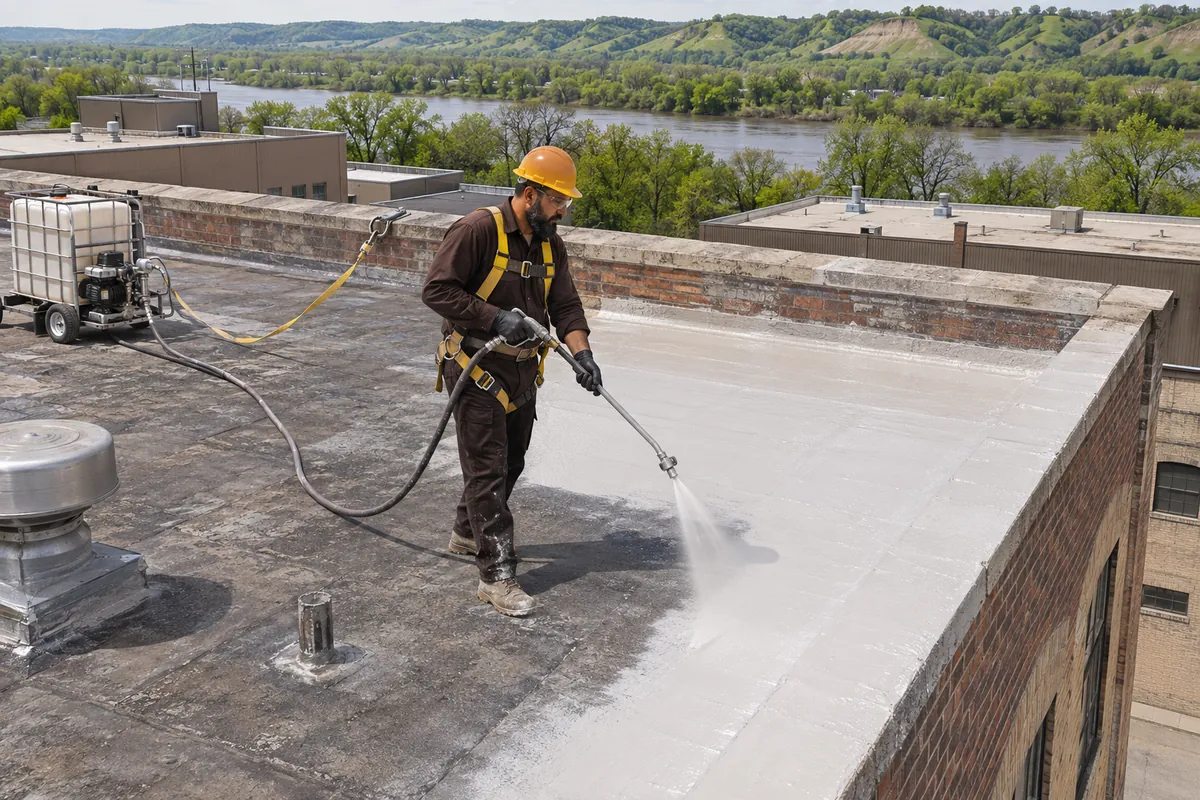
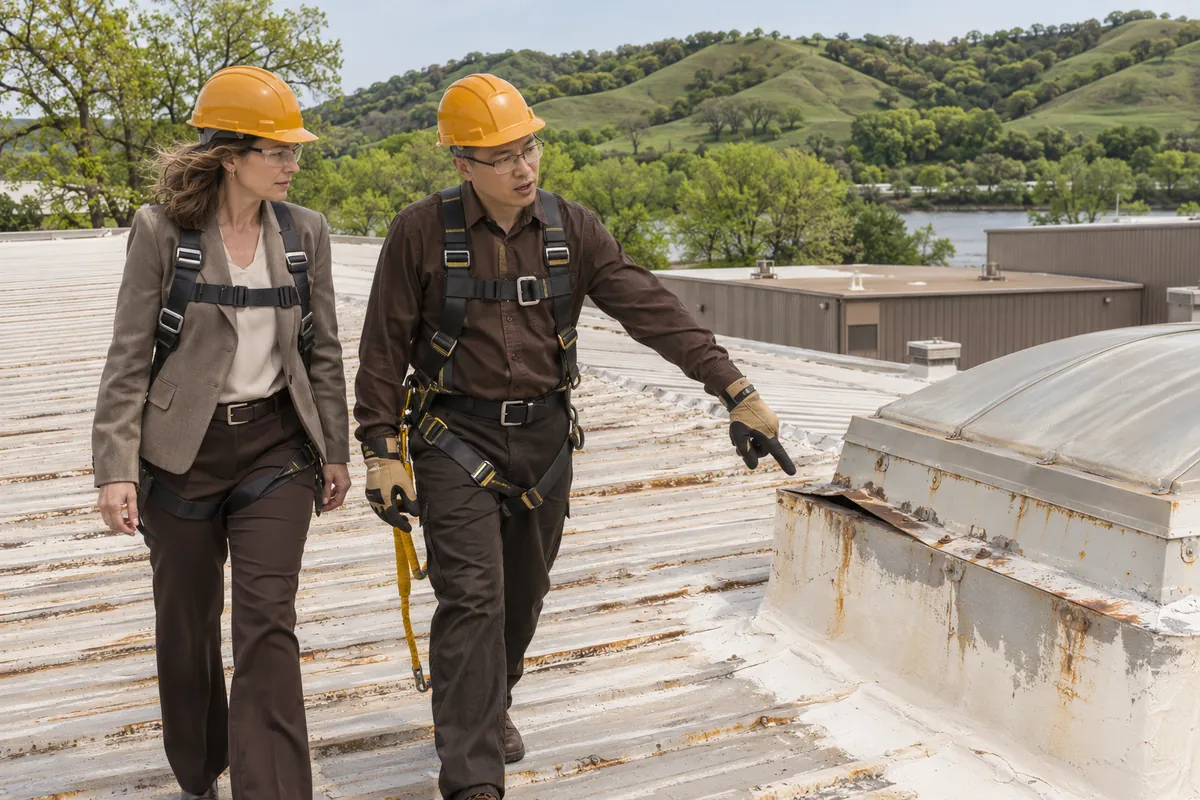
Sioux City silicone roof coating fits a roof that holds water but still has a firm deck and dry insulation. Check your roof against each row.
| Roof Detail | Ready For Silicone | Fix Or Rethink First |
|---|---|---|
| Slope | Flat or low-slope roofs with shallow ponding | Steep pitches where acrylic costs less |
| Ponding | Water that dries within a few days | Deep bays from a sagging deck or crushed insulation |
| Existing surface | Metal, built-up, modified bitumen, or single-ply | Loose gravel or a surface that peels when scraped |
| Insulation | Dry readings across the field | Wet board that squishes or reads high on the meter |
| Future plans | Owner plans to recoat with silicone later | Owner wants to switch coating types down the road |
These are the low-slope failures we find most on older Siouxland plants and storefront roofs.
Silicone comes in a few builds. The existing roof surface decides which one we use.
A rust primer and sealed fasteners come first, then silicone sprayed in one or two passes across low-slope steel panels.
An asphalt bleed-blocking primer goes down first so the old roof stays from staining the silicone. Then the field coat goes on.
Seams on aged TPO or EPDM get cleaned and primed with a product made for that membrane before silicone covers it.
Silicone gives a tired low-slope roof a second service term while the building below stays in use.
Silicone holds its bond under water that lingers in shallow bays, where water-based coatings break down.
The white or gray finish reflects summer sun off the roof deck and the rooftop units sitting on it.
One continuous film covers old laps and patches, so water has far fewer joints to find.
Near the end of its rated term, the roof is cleaned and recoated with silicone in place of a tear-off.
Call and describe the low spots. We check the drains and deck first, then tell you whether silicone fits that roof.
(402) 258-4527Call UsFive steps take a ponding roof from dirty and leaking to coated.
We probe the ponding areas, take moisture readings and cores, and mark drains, laps, and curbs that need work before silicone goes down.
Clogged drains get cleared and reset. Wet insulation and felt come out, and new board goes in flush with the surrounding roof.
Pressure washing removes dirt and loose granules. A primer matched to the surface, bleed-blocking or rust-inhibiting, goes down where the system calls for it.
Fabric and silicone mastic go around drains, curbs, pipe boots, and parapet corners so the busiest joints get extra thickness.
Silicone goes on in one or two passes. Wet-mil gauges confirm the thickness as we spray, and a final walk checks the edges.
Mixed roofs are common here. These systems handle the sections where silicone is a poor match.
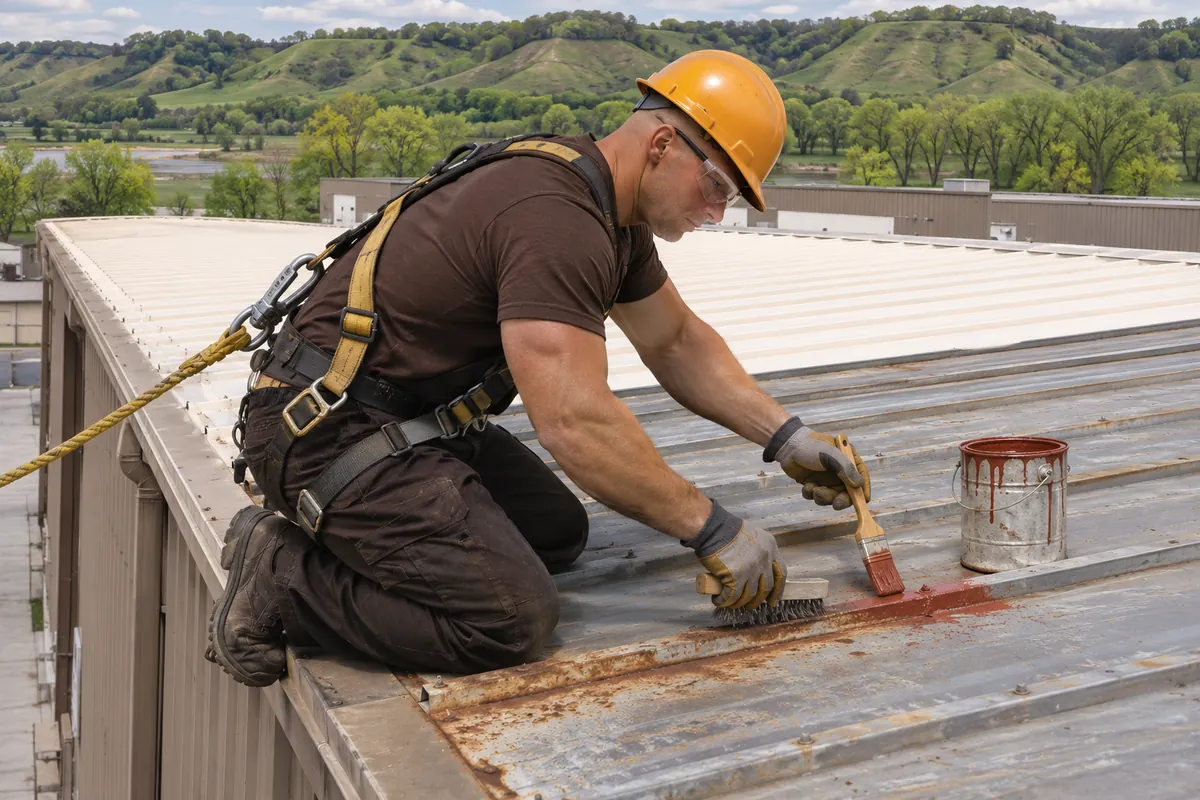
Pitched steel panel roofs over the shop side of a building get fastener work and a full metal coating build.
Metal roof coating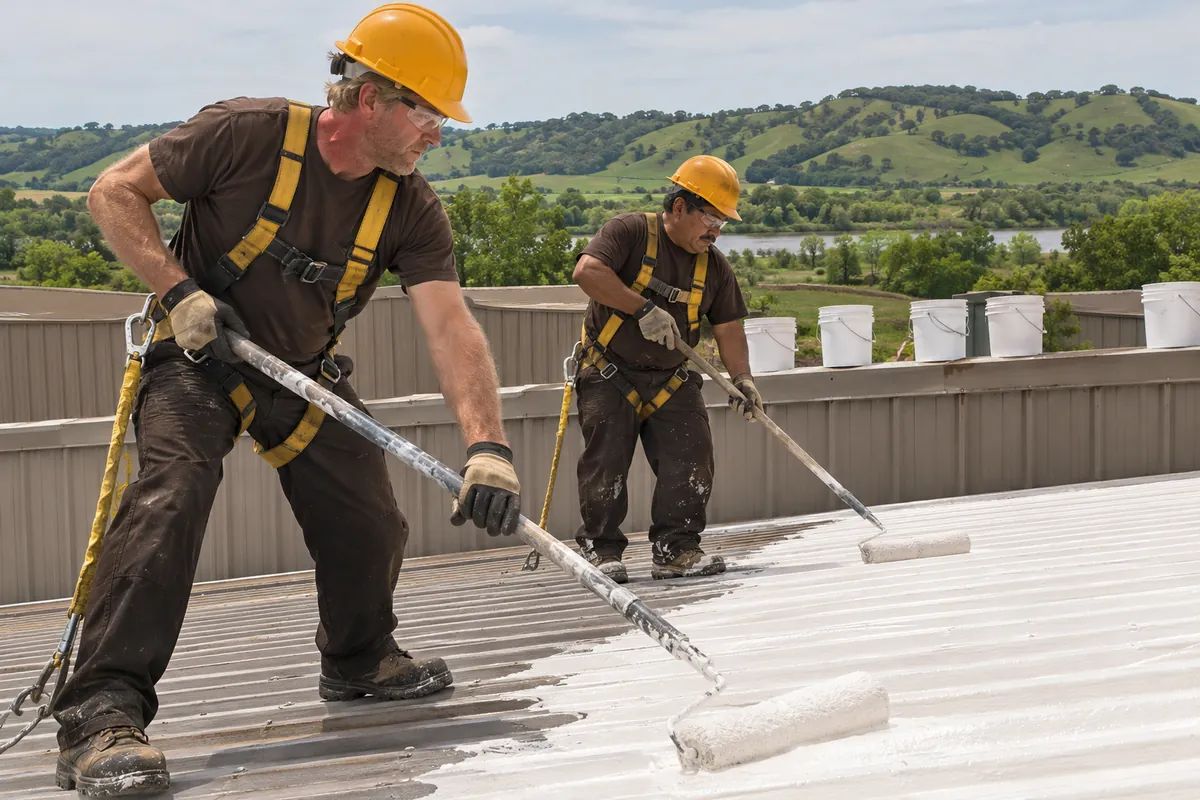
Sloped sections that drain fast can take acrylic, which costs less per gallon than silicone.
Acrylic roof coating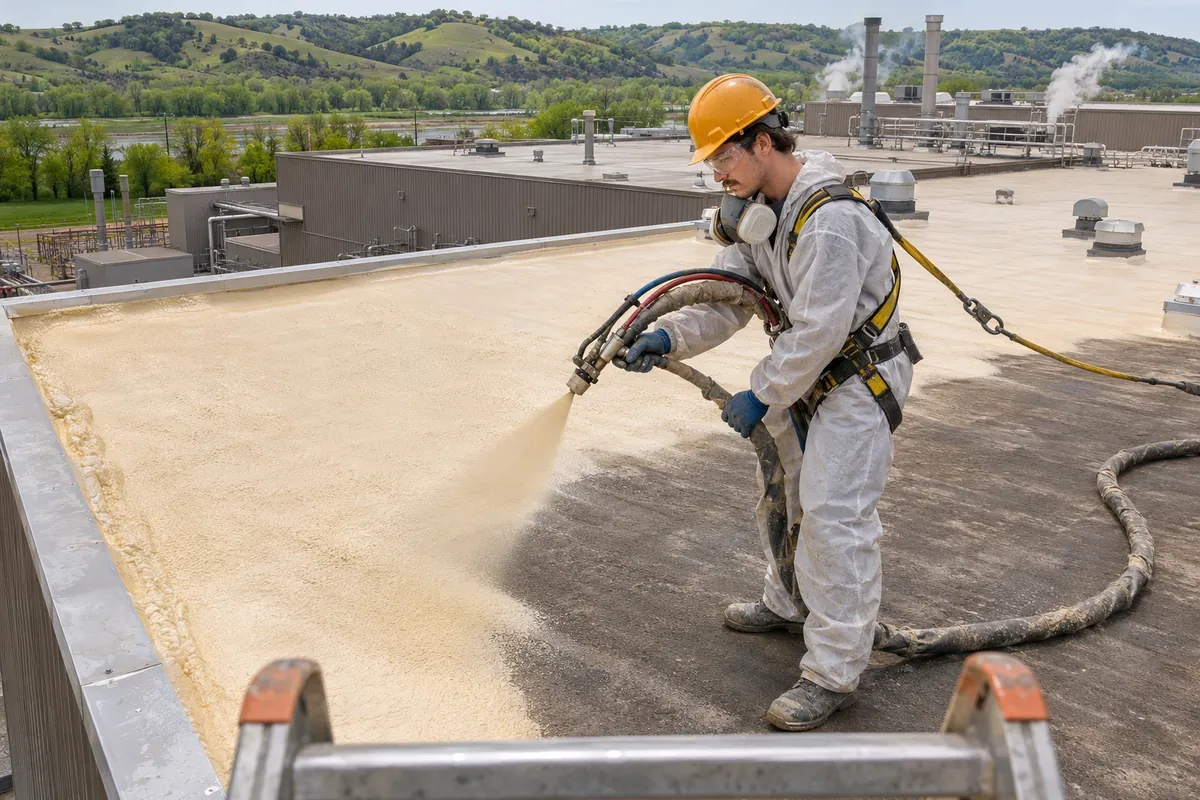
Flat roofs that need insulation as well as waterproofing get foam topped with a protective coating.
Spray foam roofingStraight answers on silicone cost, coats, ponding, and service life.
Silicone plans inside our range of about $2.50 to $4.00 per square foot, usually toward the upper half because the material costs more per gallon than acrylic. Rust work, seam repairs, the primer, roof access, and the thickness spec all move the number. We measure the roof and walk it before giving a firm price.
Four trade-offs come with silicone. Its surface picks up dirt, which dulls the white finish over time. Most other coatings will not bond to cured silicone, so later recoats stay silicone. A wet or frosty silicone roof is slippery, and heavy foot traffic around equipment can tear it.
One or two, set by the thickness the manufacturer requires for the rated term. That minimum is stated in dry mils. Fasteners and laps get a detail coat first, then the field coat. Rough or heavily ribbed panels often take a second pass to reach the full thickness evenly.
Yes, better than most acrylics, which is why it is the common choice for low-slope roofs here. It keeps its bond under water that stands for days. Ponding still adds weight and leaves dirt rings, so clearing drains and filling low spots comes before the coating is chosen.
Manufacturers commonly rate silicone for about 10 to 20 years at the specified mils, so thickness is the main lever. Hail strikes, boots near rooftop units, and dirt buildup wear it faster. A yearly inspection catches small tears early, and a clean silicone roof can take another silicone coat later.
Get a ballpark range for your roof size, or call to have the ponding areas checked.