Chalked And Faded Panels
- You See
- Powder on your glove when you wipe the panel, and paint fading to bare zinc.
- What It Means
- The factory finish has worn thin. After washing and priming, acrylic restores a white surface that sheds water down the ribs.
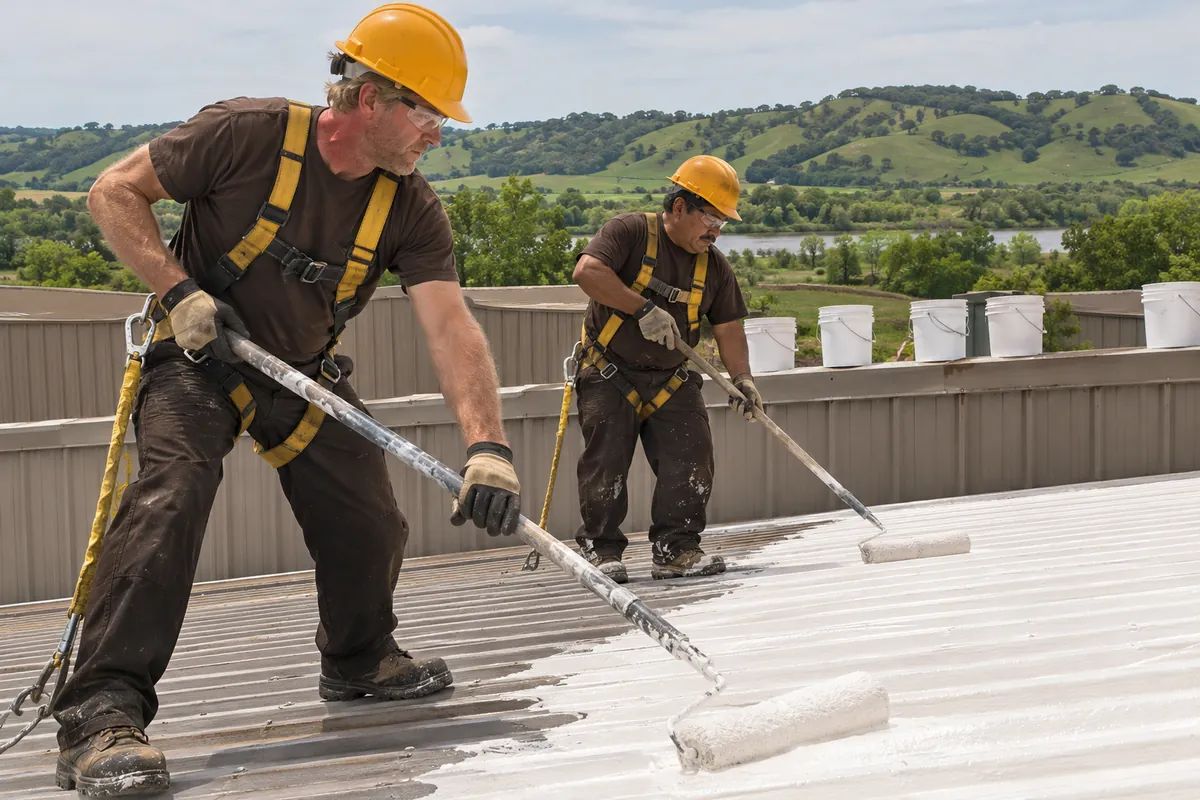
As a Sioux City acrylic roof coating contractor, we roll and spray water-based acrylic over primed steel on shops, pole buildings, and sloped commercial roofs.
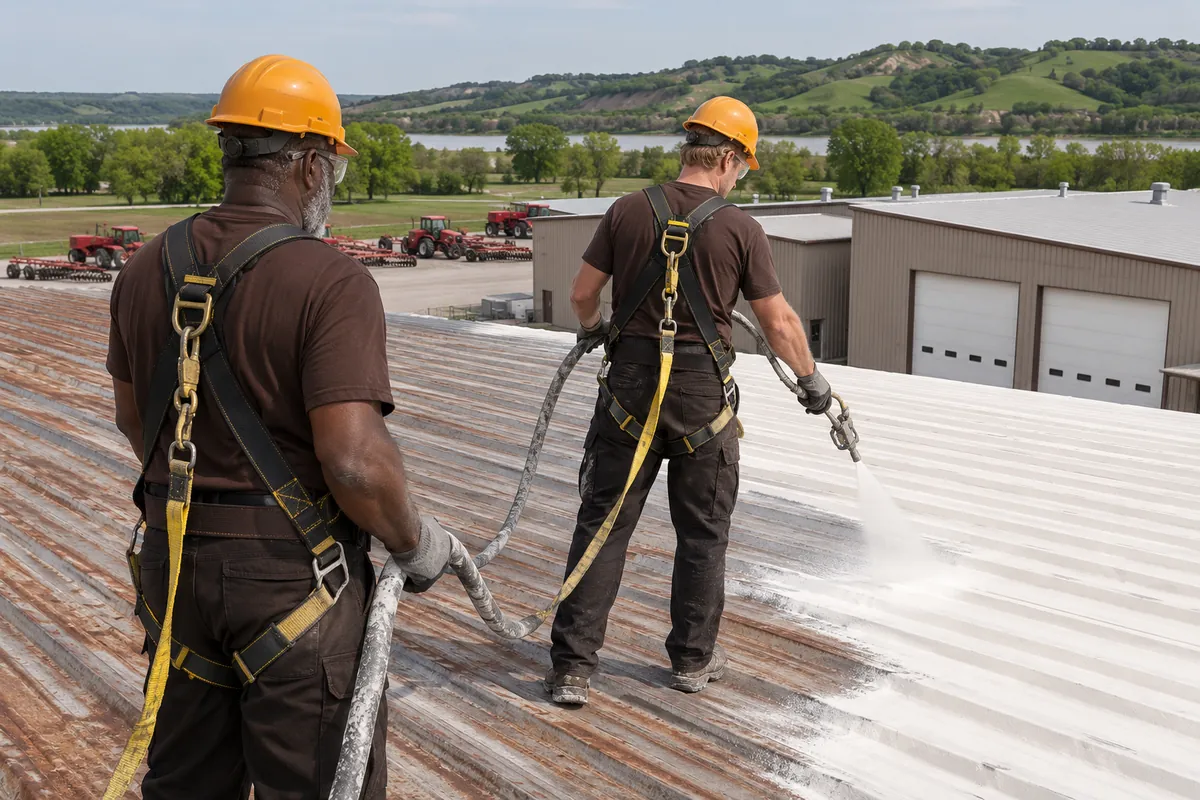
Sioux City acrylic roof coating works best on roofs that shed water fast and can be coated during a dry stretch. Compare your roof here.
| Roof Detail | Ready For Acrylic | Fix Or Rethink First |
|---|---|---|
| Slope | Pitched panels that drain within hours | Flat bays where water stands |
| Panel condition | Chalked paint and surface rust | Holes or panels lifting at the purlins |
| Weather window | Warm days with a dry forecast | Late fall nights near freezing |
| Existing coating | An older acrylic or bare metal | A silicone coat that acrylic cannot bond to |
| Foot traffic | Occasional visits for inspections | Daily trips to rooftop equipment |
Sloped steel roofs here wear in a few predictable ways.
Acrylic builds change with the roof underneath. These three cover most sloped commercial roofs we coat.
A rust-inhibiting primer, then a base coat and a finish coat in contrasting colors so thin areas are easy to spot.
Polyester fabric set into acrylic at every end lap and curb before the field coats go on.
Washing, spot repairs, and one fresh acrylic coat over a worn acrylic that still holds tight to the steel.
Acrylic gives a sloped steel roof a fresh, reflective surface at a lower material cost than silicone.
A white acrylic surface bounces sunlight off panels that would otherwise heat the shop below.
Fresh acrylic bonds to old acrylic, so a future recoat needs only a wash, spot repairs, and a new coat over the panels.
The film stays flexible as panels expand in July heat and shrink on January nights.
Per gallon, acrylic usually costs less than silicone, which adds up on large sloped roofs with long panel runs.
Call to schedule a roof walk before the next coating season. We check the panels and give you a plan for acrylic or another system.
(402) 258-4527Call UsAcrylic needs the right weather, so the steps are planned around the forecast.
We check panel ends, fastener rows, laps, and curbs, and confirm the roof drains fast enough for an acrylic system.
Acrylic needs warm air, a dry surface, and several rain-free hours to cure. We book coating days by forecast and move them if rain moves in.
Pressure washing takes off chalk. Rusted ends and laps get wire-brushed, and a rust primer goes on bare steel.
Screw heads get brushed sealant, and laps and curbs get fabric embedded in a base layer of acrylic.
Two coats in different shades go on so thin spots stand out. A final walk checks coverage on every rib.
Roofs with flat sections, heavy traffic, or shingles get a different system.
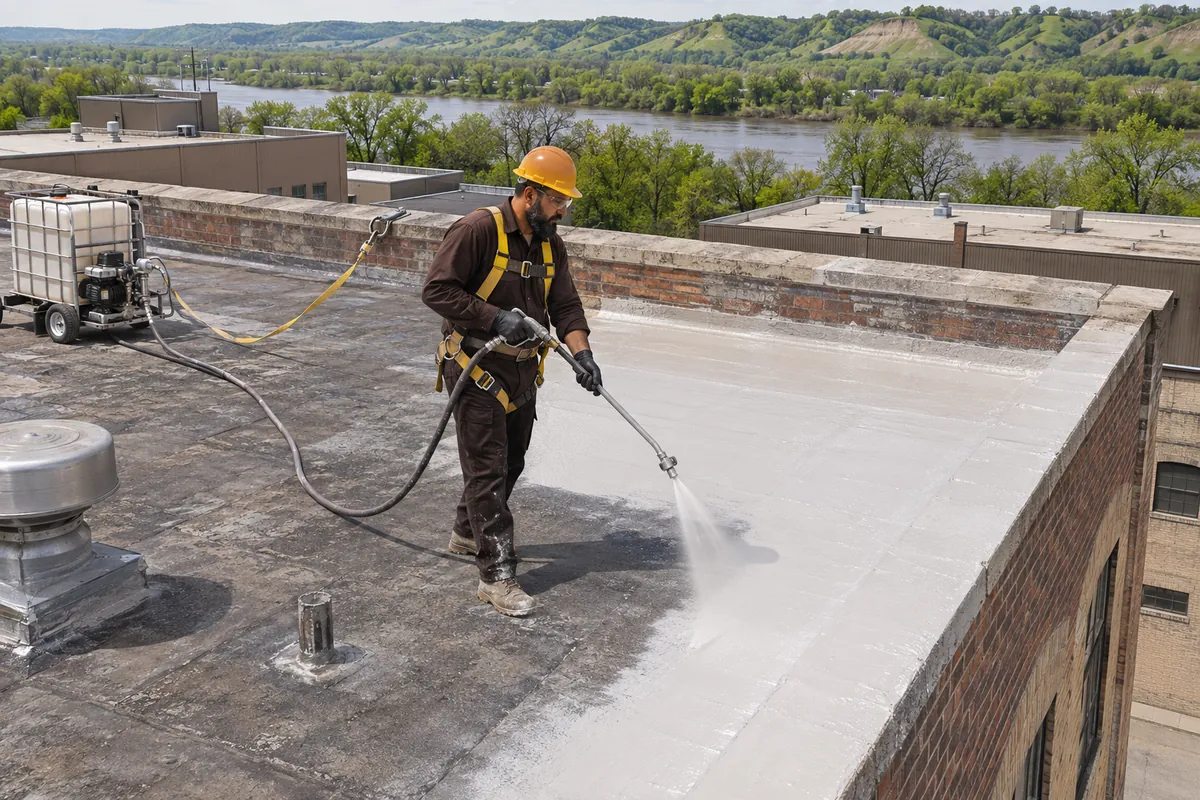
Flat bays that hold water after rain need silicone, which keeps its bond under ponding.
Silicone roof coating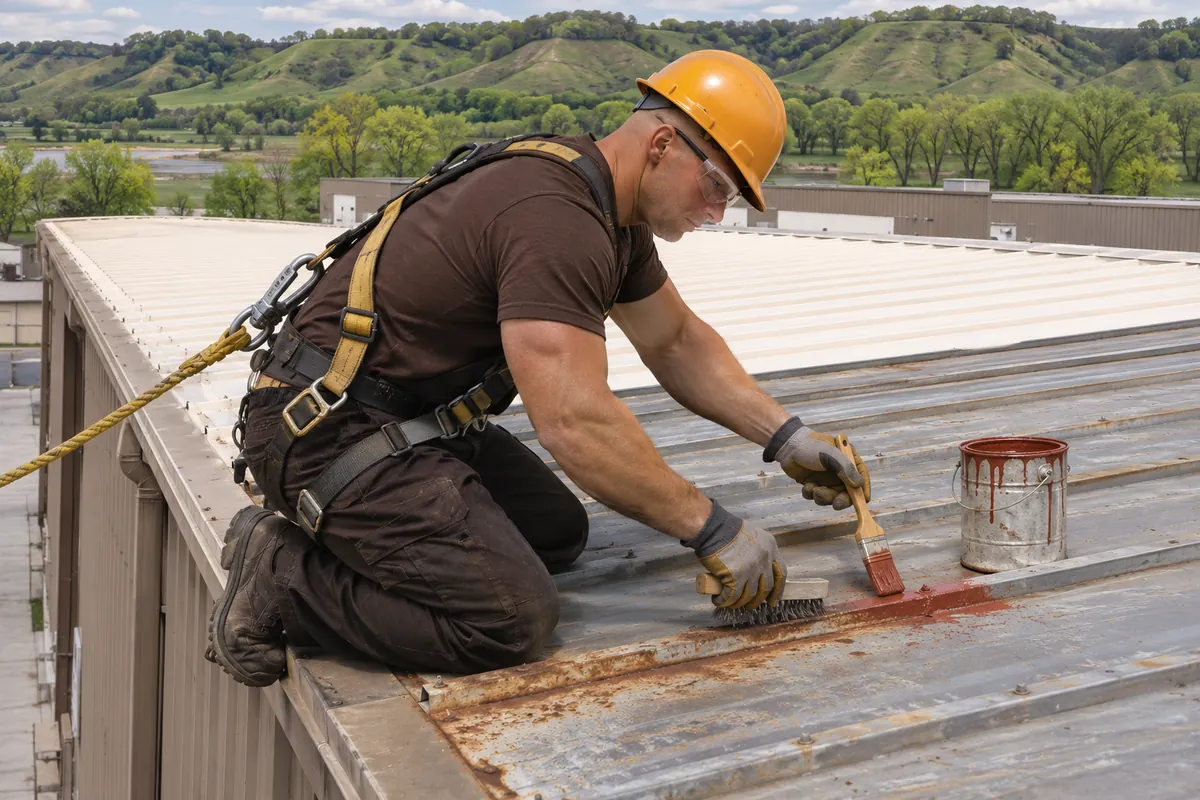
Badly rusted steel with leaking laps gets the full metal coating build, with fabric at every joint.
Metal roof coating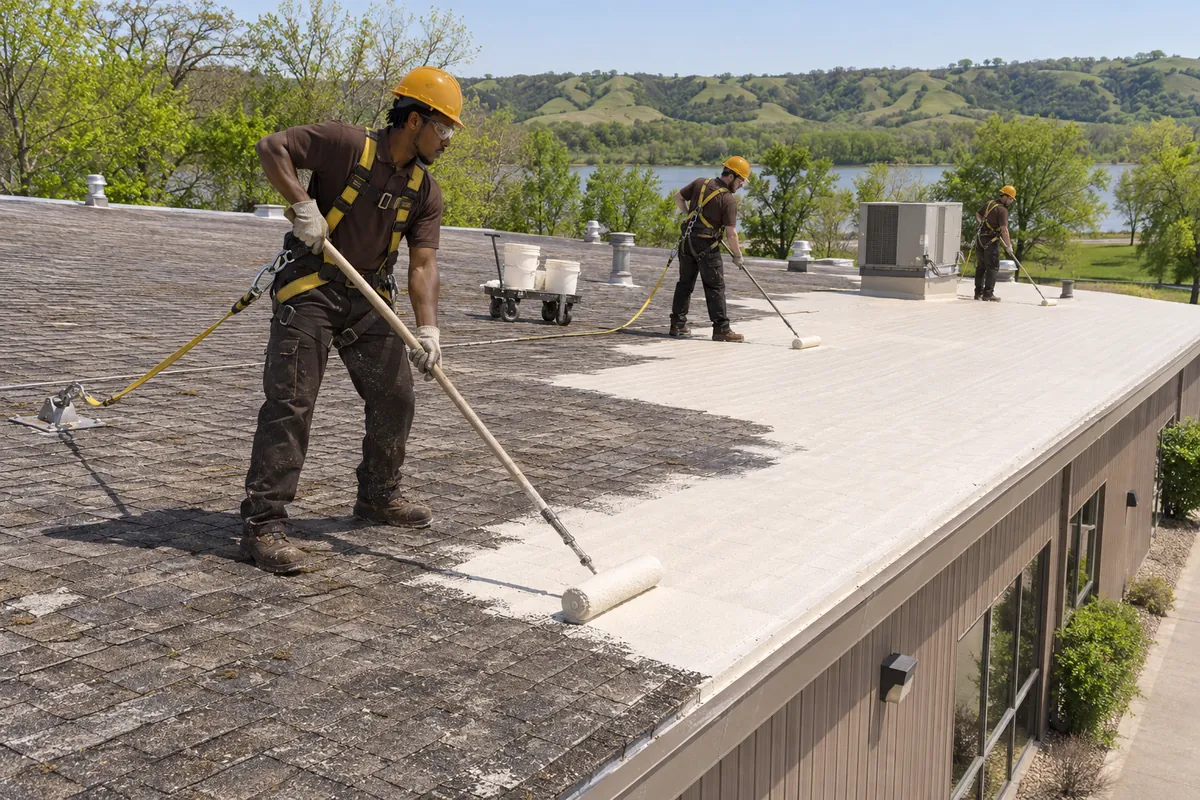
Pitched shingle roofs on office wings get a coating made to bond with granules.
Shingle roof coatingOwners ask about acrylic cost, weather limits, and how long it holds up.
Acrylic plans inside our range of about $2.50 to $4.00 per square foot. The material usually costs less per gallon than silicone, though acrylic often goes on in more coats. Rust treatment, seam and fastener work, primer, roof size, and access shift the total, and a measured roof walk sets the firm price.
Two limits matter here. Acrylic softens and loses its grip under water that stands on flat spots, so it belongs on roofs that drain. It also needs warm, dry weather to cure, which shortens the working season in Siouxland. Rain or heavy dew right after application can wash fresh acrylic off.
Very well on sloped panels. It bonds to primed steel, flexes as panels move with heat and cold, and the white finish reflects sun. Water runs off a pitched panel roof quickly, which suits acrylic. Low-slope steel that holds water after rain is a better match for silicone.
Manufacturers commonly rate acrylic systems for about 10 to 15 years at the specified thickness. Standing water, hail, and dirt shorten that span, while good drainage and yearly checks help it reach the full term. A clean acrylic roof that still holds tight can take a fresh acrylic coat to extend its life.
Wind and hail wear coated steel roofs here the most. Sioux City's adopted building code design criteria list a 115 mph ultimate design wind speed, which is why loose screws and open laps get fixed before coating. Hail dents panels and chips the surface, so we check after big storms and patch with a matching coating.
Get a ballpark range from your roof size, or call to plan acrylic work for the next dry stretch.